
ClickCease
  • Blog
  • About
  • Contact
  • Blog
  • Copywriting and Content
Menu

I Sell Words - Melbourne Copywriting, Marketing, Blogs and SEO Content

tom@isellwords.com.au
Melbourne
+61 417120749
I sell words because my words sell. - Melbourne Copywriter Tom Valcanis

Your Custom Text Here

I Sell Words - Melbourne Copywriting, Marketing, Blogs and SEO Content

  • Blog
  • About
  • Contact
  • Blog
  • Copywriting and Content

How To Make Your Google Ads Rock In 2025

October 14, 2025 Tom Valcanis
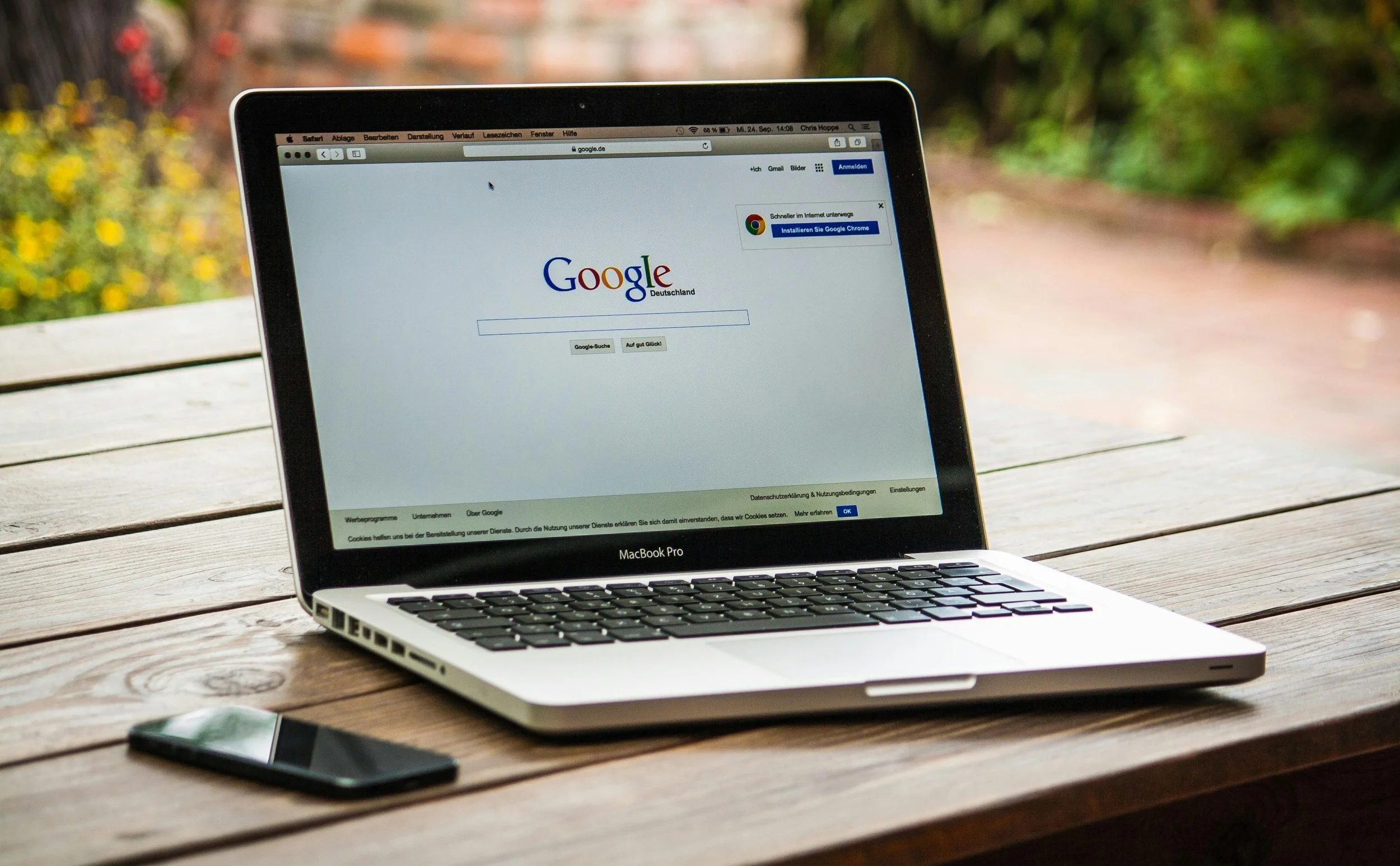
computer with search

Pexels - CC0 License

When it comes to getting customers to pay attention to you, you only have a few choices. One option is to use cold outreach. You literally pick up the phone or type out emails to prospects who don’t know you, one by one. 

Another option is warm outreach. This is where you get in touch with people who already know you and are thinking about buying from you. This could be a referral from an existing customer or people who know you because of your content on social media. 

The latter example is interesting because it means you’re reaching out to multiple people. But what if you don’t have a content presence but still need to reach a large market to flog your services. 

That’s where Google Ads come into the picture. These give you massive reach, even if your audience doesn’t know you. 

But how are you supposed to master this type of marketing? What actually works and gets results? 

Keep Auditing

The first thing you’ll want to develop is your feedback loop when using Google ads. The last thing you want is for ads to cost you a lot of money and fail to deliver any results. 

The way around this is to set up a proper audit cycle. You want to ensure that you’re constantly looping back to check on what you’re doing to see if it is working. A lot of companies will just pay for Google Ads without really measuring their effect or taking their impact into consideration. Sometimes campaigns will run for years without generating any return. 

The best way to audit is to keep testing and trialling different approaches. Most businesses can be successful with ads, but they will never work for some industries, so that is always worth bearing in mind. 

Integrate Web And App Campaigns

It’s also well worth integrating web and app campaigns, a new feature that’s available for 2025. This tool allows customisation of ads across multiple platforms in ways that make sense for brands. 

The best thing about this approach is that it unifies measurement. Companies no longer need to tally results from app or web-based campaigns. Instead, the data can be pooled and specific insights can be found.

Attribution is also better under this model. You can literally see where your ad spend is working for you, and where it isn’t enabling better ad targeting by platform, changing how you allocate funds between strategies. All you need to do is wait for the data to roll in. 

Use Expiration Mode 

If you can improve your use of Smart Bidding with expiration mode, that’s also a good idea. The idea here is to target return on ad spend first and then use Exploration whenever you run a promotion. You should find that you get about 10% to 25% more volume without costs increasing significantly. 

Of course, this tactic is highly industry-dependent, but it is well worth exploring. If you can eke out a little extra performance, you can often out-do competitors who are not using the same strategies. 

Use First-Party Data

You could also look into using first-party data to improve your conversion rate. Due to the backlash, Google is looking at phasing out cookies for a more ethical approach to ads. As such, companies are now feeding customer personal information on their books into their ad campaigns, as well as data kept off the books. 

Interestingly, this approach is actually enhancing return on ad spend. A lot of customers appreciate it when brands they already have relationships with reach out to them and try to do business. 

If you can implement Google Tags across your site, that can also help. Removing bad leads is essential though so you can track based on value. 

If you're scaling up your outreach, then you might also want to include things like the customer’s lifetime value. This way, you can track the impact of your ad spend when targeting specific markets. 

Use The Google Asset Studio

You could also look into using Google’s Asset Studio to improve your ads for 2025. This tool essentially allows you to generate new video clips, images and ad variations at will so you can test which work best. All you need to do is enter the right prompts. 

For consumers, this sort of approach is quite novel still. A lot of people aren’t used to the sight of highly creative Google Ads, so it could make a significant difference to your campaigns. 

Avoid Bloated Campaigns

It’s also a good idea to avoid the temptation to run bloated campaigns. While you might want to run ads for multiple products and locations, that doesn’t always work. 

The best way to approach this problem is to do what experts, like Loudmouse Digital Marketing, do. They segment campaigns into specific funnels, depending on the product. Then, they run them in parallel with each other, ensuring they reach out to the ideal market niche. 

If you don’t adopt this level of focus, Google Ads won’t know who you are trying to target. It will also serve ads to customers who don’t click the link, or simply don’t want to buy what you have to offer. 

Optimise Voice With Longtail Keywords

If you want to really master Google Ads in 2025, then you’ll need to look into optimising your voice-based SEO with long-tail keywords. This approach is highly effective since only a minority of companies are doing it, and it is not popular throughout the industry. 

For example, let’s say you sell something specific, like LEDs for bathroom vanities. Targeting a voice-based long-tail keyword like “I need new LEDs for my bathroom vanity” could go a long way. 

Usually, ads that focus on these keywords can drive higher traffic. Voice inputs tend to have a high degree of intent, meaning that customers are keen to buy. 

Google Keyword Planner is helpful for finding voice-related keyword searches. However, it is also worth speaking to experts, just to ensure you’re on the right track.

In Marketing Tags search engine optimisation, google ads, PPC

What is Digital Marketing In 2022?

May 2, 2022 Tom Valcanis
digital marketing 2022

Digital marketing - we’ve all likely heard the term being bandied about in boardrooms and offices - but what is it really? Marketing is the process and art of identifying and satisfying customer needs through mass communication. Marketing has been aided by digital means since the 1960s, with mainframes crunching demographic numbers for advertising agencies. However digital marketing refers to marketing purely using media driven by digital means - the World Wide Web, hand-held computing, electronic billboards, and so on. Now that our culture is digital, our marketing is also digital. This gives marketing greater speed, accuracy, and channels to promote products and services than ever before.

Digital Marketing vs. Traditional Marketing

The biggest difference between “traditional” marketing and digital marketing is that digital marketing is often bi-directional - audiences can “talk back” to brands and companies. This can be a blessing and a curse for digital marketers, who can use the data to refine their product or service; but also means managing negative feedback and how that can effect community and sales. So what is digital marketing in 2022?

Digital Marketing Channels

Digital marketing companies will often tout they are “channel agnostic” or “omni-channel” - meaning they employ as many media (that is, carriers of messages) as possible. Digital marketing channels need not be discrete: they often overlap and complement one another. For example, let’s take a look at the web and Search Engine Optimisation first.

Search Engine Optimisation

If you are a business and have a website, the aim is to have it shown to as many people as possible to gain as much traffic and sales as possible. This is achieved by Search Engine Optimisation, as I’ve discussed in detail here. This means organising or curating your content to match what people are searching for on Search Engines so it ranks higher in relevance and above your competitors in search engine results. This organic, or non-paid traffic, means a higher return on investment over time than paying for leads or sales over and over again.

Pay Per Click Advertising

Pay Per Click (PPC) advertising has been around a long time (in computer terms) with the first ever PPC ad bought by a Silicon Valley law firm on the now defunct Global Network Navigator site as far back as September 1993.

As I wrote on my blog Crushtor.net,

“Advertising alongside search engine results pages (SERPs) became the standard in October of 2000, when Google launched its AdWords service. Companies and brands would pay for sponsored links that appear at the top of search results, bidding for the top spot using automated algorithms. When a browser clicked on the ad, the company paid for the privilege – what’s known as a “Pay Per Click” advertisement.”

By most accounts, a business can expect to earn $2 in revenue for each $1 they spend on PPC. This is further refined by using data to pinpoint where ad spend (i.e. higher quality keywords, remarketing, demographic shifts, etc.) should go to receive the maximum return on investment.

Social Media

Social media such as Twitter, Facebook, and Instagram are “no brainer” digital marketing platforms. Billions of people combined use social media every day, and deploying advertising and marketing through these channels is the reason why these channels exist in the first place. However, it also gives brands and companies opportunities to talk directly to consumers and hear their concerns - as well as the added challenge of responding to negative feedback. Social media marketing comprises Pay Per Click advertising, organic community management, and content strategy or curation.

Content Strategy

Content strategy, as I’ve outlined here, is a part of digital marketing in terms of reaching customers or audiences using text, video, moving images, audio, and other multimedia. The more strategic content a brand or company can leverage, the more it flows into SEO, social media, and other aspects of digital marketing.

Email Marketing (eDM)

Email marketing or electronic Direct Mail (eDM) is a powerful tool in a digital marketer’s arsenal, allowing marketing communications to be sent to willing customers (as almost all jurisdictions forbid unsolicited eDMs - aka spam.) These customers opt-in to mailing lists to recieve special offers, tips or tricks, or affiliate offers. Sort of like my fantastic eDM, which you should definitely sign up for!

Native Advertising

Native advertising is a story or piece that’s published to a blog or online news site that’s supposed to look like normal, unbranded content - but in fact is an advertisement for a product or service. This may be disclosed as “in partnership with” or “promotional consideration by.”

Videos and Podcasting

Producing video or podcast content is fast becoming a new avenue for digital marketing, as it too is a space where digital marketers can either buy up time in various (and hopefully popular) video/podcasts for impressions or launch a video or podcast series that directly markets to consumers on their own. This has some overlap with influencer marketing.

Affiliate or Influencer Marketing

One of the more recent developments in digital marketing is using affiliates or influencers - people with a substantial following on social media - to promote products or services. This could appear as native advertising - e.g. sending your new prototype watch to a watch review channel on YouTube (my favourites being The Urban Gentry and Just One More Watch) or paid advertising such as sponsored posts. Affiliates get a commission for each sale they make, usually through partner programs as run by Amazon.

Using Data Driven Marketing

One of the major differences between digital and traditional marketing is the data this type of marketing generates. Clicks, page views, bounce rates, interaction rates, demographic information - is all harvested through various applications such as Google Analytics, Google Search Consoles, or Customer Relationship Management software (CRM.) This helps marketers identify incoming search terms, what people are looking for and tailoring content to fit, and market to specific niche segments, e.g. 18-24 year old men who enjoy watching football and eating chocolate ice-cream (yes, it can get that granular!)

Does my business need Digital Marketing?

In short: yes. If you want to reach customers, create a community, and sell to a wider audience, your business absolutely must employ some measure of digital marketing. “Building it and the audience will come” is relying on hope and prayer to ensure business success. Holistic and sustained digital marketing campaigns help your business not only survive in the online marketplace, but thrive and grow into the long term.


Do you need help with your digital marketing and copywriting in Melbourne? Contact me today!

Contact Me!
In Copywriting, Word, Marketing Tags digital marketing, copywriting, PPC, content strategy, email marketing, advertising, apps, videos, podcasting, melbourne copywriter

Powered by Squarespace